Association
5 Super Powers that Clean Data Gives Your Association
Accurate data is the key to better decision making, increased member engagement, higher staff morale, and more.
With trustworthy data, you improve decision making, increase member engagement, raise staff morale, and more. Get started with our 10-step plan.
"Understanding what members truly value requires more than intuition — it demands data." -The Canadian Society of Association Executives (CSAE)
Clean data removes uncertainty. With accurate, trustworthy data, you can improve decision making, increase member engagement, raise staff morale, and more.
But many associations, unions, and non-profits struggle to maintain clean member data. In fact, two of this year's top challenges for membership organizations are incorrect data and data silos (source: 2026 Membership Performance Benchmark Report).
If dirty data is holding you back, get started with our 10-point plan to tame your member data.
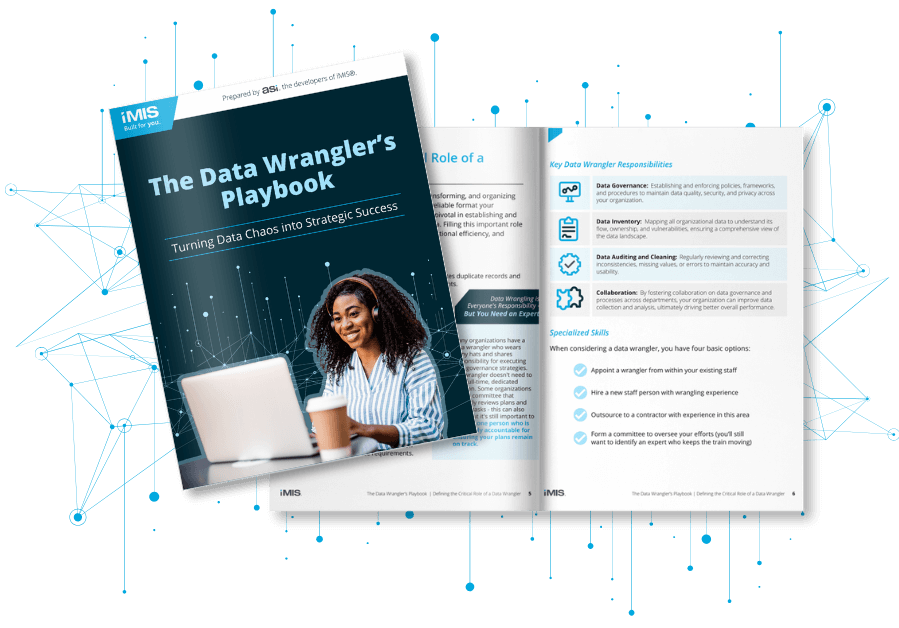
This article is from pages 8-10 of The Data Wrangler's Playbook. Download this free guide to define this critical role, identify your biggest data challenges, and get tips for keeping data fresh.
To get your data in line, you’ll need to lay the foundation for cleaner, more reliable data practices throughout your organization before the ten-point plan can be implemented.
Here’s our recommended ten-point plan you can use to get started in your data wrangling journey.
A member management system that offers a single source of truth nearly eliminates duplicates, provides access to reliable data across your organization, reduces your costs, frees you from relying on IT, and gives your staff more control.
More on this in our guide, It's Not You, It's Your Data Silos.
 Go from data silos to a single source of truth
Make data governance a shared responsibility across all departments to emphasize its importance to the entire organization. Think of your data as a product of the organization and not something that resides with IT or membership alone.
Use data cleaning tools that automate the data validation, error detection, and correction processes.
Want to automate a process? The first step is going through each step to understand its purpose. And no, "this is just how it's done" isn't a valid reason. See all 6 steps in our article, Streamline and Automate Your Membership Management.
Success story: Previously, renewal processes at Amplify Alliance relied heavily on manual workflows and staff intervention. By automating renewal workflows, the association reduced renewal process time by 99%. This is no doubt appreciated by both members and staff. Read more in our article, 90% Less Admin Time: Lessons from Amplify Alliance.

Create an organizational glossary for key terms. Create a data dictionary that defines the data you collect and where and how it is stored. Together, this will help avoid confusion and ensure that all departments interpret data consistently.
Set up automated validation rules to prevent errors during data entry and help catch issues at the source.
Schedule periodic data reviews to keep data clean and accurate over time. Regular audits prevent problems from mushrooming later.
When data issues are discovered, address the issue, then look for similar patterns in your data to uncover other instances of the same pattern. Address the other instances, then take the time to root out the cause of the bad data to prevent the pattern from continuing.
Standardize data formats across systems to ensure consistency and reduce the risk of integration issues.
Implement data security protocols, including encryption and access controls to protect sensitive information from unauthorized access.
Ensure your team has the knowledge and skills needed to manage data effectively by offering regular training and upskilling opportunities. Learn how to create a supportive staff learning environment.

Think of your data as a product of the organization and not something that resides with IT or membership alone. Encourage all teams to recognize the value of clean, accurate data. Make data governance part of your organization's core values.
As we all know, clean data can be harder than it sounds. Get started with our free guide, The Data Wrangler's Playbook. You'll be ready to put a plan into place to turn data chaos into strategic success.
This guide will help you:
Accurate data is the key to better decision making, increased member engagement, higher staff morale, and more.
How to keep your membership data clean in the long run.
A Data Wrangler drives better decision-making, enhances efficiency, and minimizes risk at associations, unions, and nonprofits.