Association
10 Ways to Boost Your Membership Organisation's Revenue
10 ideas that generate revenue and enhance the member experience for your association, union, or nonprofit.
Marketing automation allows for personalised messages while freeing staff to focus on high-value member relationships.
For membership associations, engagement is no longer a marketing metric alone. It's a board-level indicator of relevance, resilience and future revenue.
Around the world, association leaders are facing a familiar squeeze: members expect more personalised value, staff teams are under pressure, digital channels are noisier than ever, and renewal decisions are becoming more deliberate. The old model of sending the same newsletter to every member and hoping for the best is not enough. Today, engagement needs to be intentional, data-informed, and timely.
That is where membership marketing automation becomes strategically important. Not as a machine for sending more emails. But as an intelligent way to deliver the right message, to the right member, at the right moment.
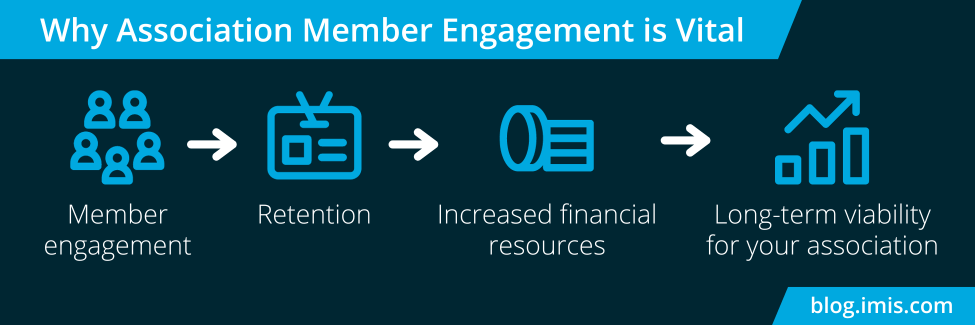
Looking for a more technical guide on the six steps to start automating processes Check out our article, Streamline and Automate Your Membership Management.
Association staff often spend too much time on repeatable communication: confirmations, reminders, renewal notices, thank-you emails, profile update prompts and event follow-ups. These should be automated wherever possible, freeing staff to focus on higher-value member relationships.
This is not about removing the human touch. It is about reserving human attention for the moments that deserve it. A renewal reminder can be automated. A call to a strategically important corporate member showing declining engagement should be personal.

Many associations still communicate in campaigns:
Campaigns matter, but members experience your association as a journey. They join, explore, attend, learn, volunteer, lapse, return, advocate and influence. Marketing automation helps associations design around those moments.
A new member, for example, should not simply receive a receipt and a login link. They should receive a structured onboarding journey: welcome, orientation, benefits reminder, event recommendation, community invitation, and a gentle prompt to update their profile. If you offer different levels of membership, then the welcome message should reflect their particular level or category. Don't include a list of irrelevant items.
Tip for iMIS users: Create this journey using segmented communications, personalisation fields, communication templates and automated processes. Send emails to individuals or segmented lists based on standard or user-defined queries. Personalise the emails using iMIS data such as name, member type, event registration, dues amount, donation received, certification achieved, or geographic area.
This matters because engagement is often won or lost early. If a member does not understand the value of association membership in the first 90 days, the renewal conversation begins with a deficit.
The most mature associations use automation as a listening system. Every action tells a story:








Marketing automation should turn those signals into action.
For example, a member attends three professional development sessions in six months. The next message shouldn't be a generic event bulletin. It might recommend an advanced course, invite them into a specialist community, or encourage them to begin a certification pathway.
Or if a long-standing member hasn't interacted for months, the system should recognise the quietness before it becomes a resignation.
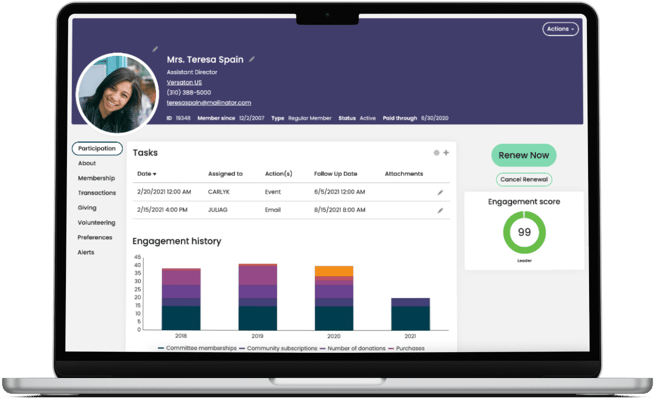
Use engagement scoring to help staff identify members or organisations with low engagement. Then act on those insights. You could create a query to locate organisations with low engagement scores, then send an email encouraging them to participate more. This is where automation becomes less like a megaphone and more like radar.
But beware of just relying on automation or just relying on email. Make sure that if you’re personalising emails, that the personalisation works and you’re not sending out obviously machine generated emails pretending to be from a person. Make sure the email makes sense and reads properly regardless of the combination of segmentation variables.
And what about when emails aren’t being read? Marketing automation isn't just email. What about if more than five emails have gone unopened? What about sending something in the post? Yes, it’s more expensive but it’s still cheaper than losing the member.
Or what about making sure that your automation adds that member to a team member’s call list, so someone actually picks up the phone and speaks to the member to try and re-engage them?
For C-level executives, the value of marketing automation is not simply efficiency. It is visibility.
The CEO does not need to know every email subject line. They do need to know
This requires the right dashboards and reporting discipline. A useful board-level question is not, “How many emails did we send?” It is, “Which member behaviours are strengthening, which are weakening, and what are we doing automatically or personally in response?”
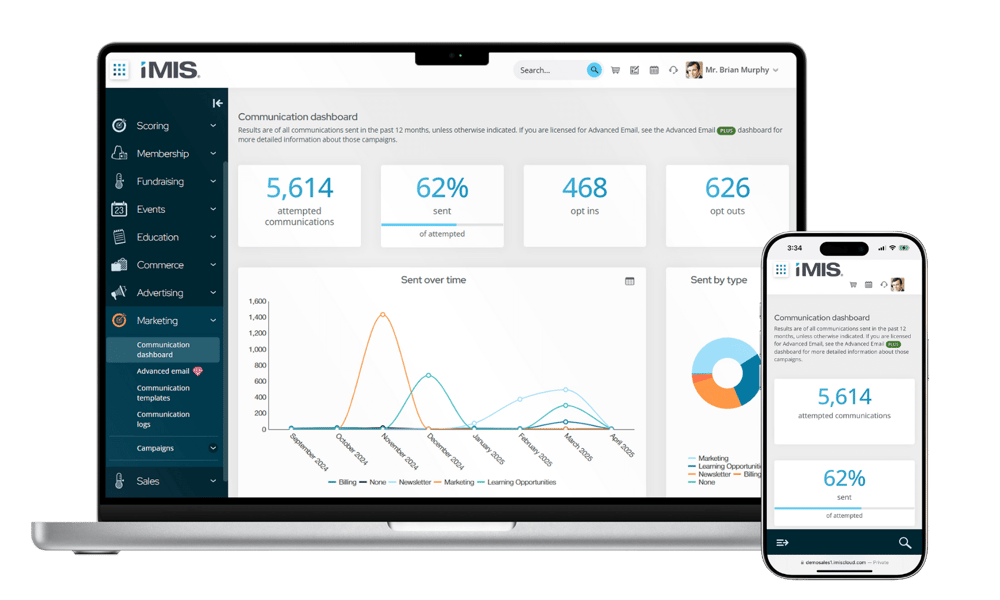
Tip for iMIS users: engagement dashboards allow staff to view site statistics and trends, including engaged contacts, recently engaged contacts, newly engaged contacts, average scores, engagement by category, engagement by month, top contacts and at-risk organisations. For executives, this turns engagement from a vague sentiment into a measurable operating rhythm.
A common trap is to segment only by member category: student, associate, fellow, corporate, retired. These labels are useful, but they do not always explain intent.
A better approach is to combine demographic, behavioural and lifecycle data. Consider segments such as:
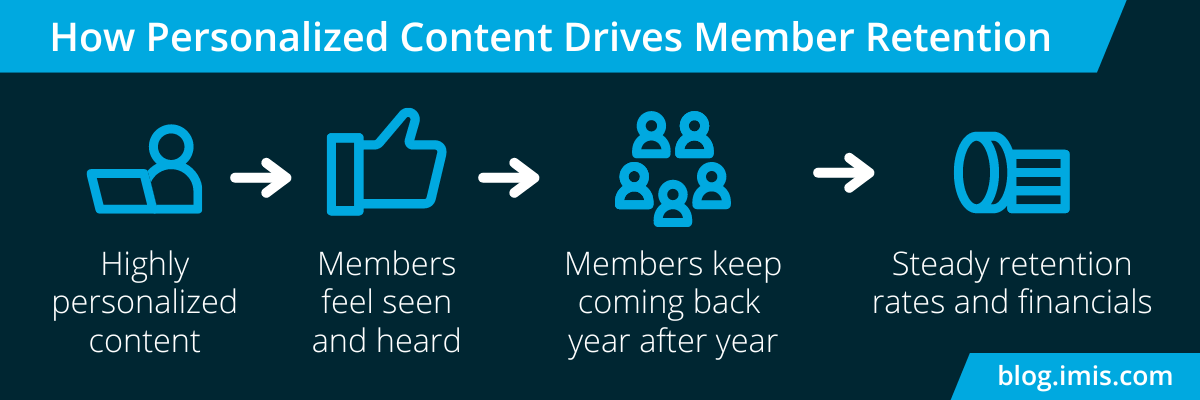
Tip for iMIS users: queries are central to creating these kinds of actionable groups. iMIS’s communication features are designed to support segmented lists and data-driven personalisation. This means automation can reflect real member behaviour rather than broad assumptions. See the iMIS marketing overview.
The goal is not endless complexity. It is relevance. A small number of well-designed segments will usually outperform a sprawling nest of half-maintained lists.
Time-based automation is useful. Behaviour-based automation is better.
A scheduled email might say, “Your renewal is due in 30 days.”
A behaviour-based email might say, “We noticed your organisation has not yet added its additional team members. Here's how to help more colleagues access your benefits.” One is administrative. The other is useful.
For associations, this opens up practical possibilities:
Tip for iMIS users: iMIS supports automation based on database changes as well as scheduled triggers. You can send communications on a schedule or when a database property is inserted, updated, or deleted.

The more personalised communication becomes, the more important trust becomes. Members should feel understood, not stalked by a digital ferret in a waistcoat.
Communication preferences, consent and unsubscribe management need executive attention because they affect reputation, compliance and deliverability.
This is especially important for global associations operating across multiple regulatory environments. A strong engagement strategy must include clear communication categories, preference centres, suppression rules and regular data hygiene.
Tip for iMIS users: staff can configure communication types and enforce member preferences, supporting opt-in and opt-out models depending on the communication type.

Automation can create a dangerous illusion of progress because activity is easy to count. Emails sent. Workflows created. Opens recorded. Clicks tracked.
The harder and better question is: what changed?
Tips for iMIS users: iMIS communication logs allow staff to review communication jobs, including sent dates, status, attempted sends, successful sends and unsuccessful sends. Advanced email interaction tracking can also record events such as delivered, opened, clicked, bounced, unsubscribed, deferred and reported as spam, where the appropriate license and communication type apply. Connect these metrics to business outcomes: retention, revenue, participation, advocacy and member value.

Marketing automation is not a marketing side project. It is part of the association’s engagement infrastructure.
For the CEO, COO, or Chief Membership Officer, the strategic question is this: can your organisation recognise member behaviour quickly enough to respond meaningfully?
If the answer is no, engagement remains dependent on memory, manual effort, and heroic staff intervention. If the answer is yes, your association can move from reactive communication to proactive relationship-building.
The associations that thrive will not simply communicate more. They will communicate with greater intelligence, stronger timing, and deeper relevance. Marketing automation, properly governed and thoughtfully implemented, gives leaders the ability to scale attentiveness.
And in membership, attentiveness is often where value begins.
This guide shows you how to activate the flywheel, improve data quality, and use AI to create deeper engagement.
This article was written by Jeremy Wilson of Connect Systems Global. Connect Systems Global helps associations, charities and membership organisations connect iMIS with the tools their teams already use, from email and events to feedback, phone, workflows and insight.
10 ideas that generate revenue and enhance the member experience for your association, union, or nonprofit.
See the top priorities for associations, unions, and non-profits and get actionable tips to improve engagement, retention, and data management.
See this year's top priorities for associations, unions, and nonprofits with data from the 2026 Membership Performance Benchmark Report.