
Request a Demo

Contact Sales

Get Pricing

Association

Common Compliance Mistakes Chapter Leaders Make

Protect your organization from fines and penalties. Discover 5 common chapter compliance mistakes—from siloed data to missed filings—and how to fix them.


Association leaders know that managing a national organization with multiple chapters can be complicated. When each chapter operates as its own entity, with its own bank account, workflows, and volunteer leadership, the risk of chapter compliance mistakes increases dramatically. A single missed filing, untracked expense, or mishandled donation exposes the entire organization to fines, penalties, reputational damage, and potential loss of group exemption.

The root cause often stems from overreliance on spreadsheets, disparate local bank accounts, and manual reporting. These outdated processes create blind spots that make compliance failures almost inevitable. In this guide, we’ll break down five of the most common compliance mistakes chapter leaders make and outline how to avoid them with better processes and technology.


1. Operating With Siloed Financial Data

When each chapter uses a different local bank, sends spreadsheets manually, or tracks expenses independently, headquarters is left without a complete or timely view of the organization’s financial health. This kind of fragmented chapter financial reporting makes it nearly impossible to:

  • Identify early compliance red flags across chapters
  • Ensure funds are used according to donor or grant restrictions
  • Produce accurate, consolidated financial reports for the full association

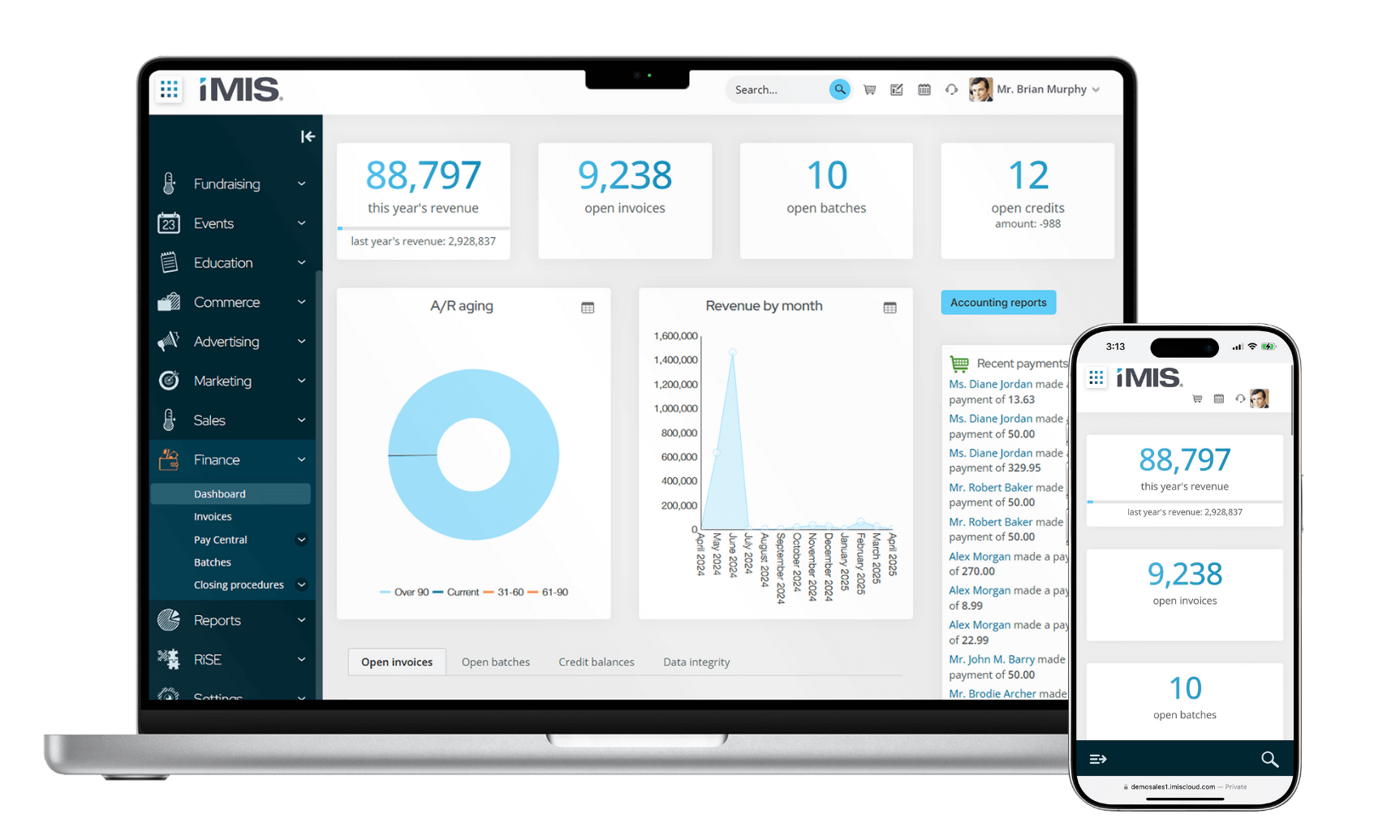
The most effective way to prevent these chapter compliance mistakes is to move every chapter onto a unified financial platform. Consider association software with built in accounting, or one with tight integration with your accounting platform. When all chapters operate within one system:

  • HQ gets real-time visibility into chapter spending and account balances
  • Reporting becomes standardized across every chapter and region
  • Inter-chapter fund transfers are fully transparent
  • Permissions and access roles can be centrally managed for better control

This unified oversight for associations is the foundation of compliance, allowing you to remain organized and consistent across multiple chapters.

3-minute tour

The iMIS Engagement Management System natively handles complex financial requirements with ease.

iMIS is built to handle the most complex pricing configurations and streamline your invoicing. Your membership data is always in sync with your accounting data. Month and year-end processes are a breeze.


2. Neglecting State-Specific Filing Requirements

Compliance is not one-size-fits-all—especially for multi-chapter associations operating across multiple jurisdictions. Each state has its own rules for annual corporate reports, charitable registration renewals, corporate entity renewals, and state-level tax filings (including 990-N for smaller chapters).

Tracking state filing deadlines is a slippery spot that trips up many associations navigating compliance. As your association expands, manually tracking these deadlines becomes nearly impossible. Missing even one required filing for a chapter can result in loss of good standing, reinstatement fees, delayed program work, or even regulatory scrutiny.

Instead, use a system designed for multi-chapter organizations that automates state-level compliance. Look for tools that:

  • Track state-by-state registration and renewal deadlines
  • Automate 990-N (e-Postcard) filings for eligible chapters
  • Send proactive alerts to chapter leaders and HQ before deadlines
  • Centralize compliance documentation for audits and recordkeeping

This level of automation removes the burden from volunteer chapter leaders and ensures your entire organization stays compliant in every state where it operates.

Person frustrated while using a laptop


3. Lacking Clear Spend and Reimbursement Controls

Picture this: Three weeks after an event, a chapter leader emails you a blurry photo of a $400 restaurant receipt with no explanation. How do you respond?

Unfortunately, situations like these are all too common when you lack clear and consistent chapter spend controls. Without these controls, associations risk:

  • Non-compliant or unapproved purchases
  • Budget overruns across chapters
  • Missing or incomplete receipts
  • Administrative chaos at year-end

The fix is to establish clear, organization-wide spending and reimbursement policies and support them with technology that keeps every chapter aligned. Your policy should include:

  • Approved expense categories, such as events, supplies, travel, or marketing materials
  • Dollar thresholds for purchases requiring pre-approval
  • One standardized reimbursement process across all chapters
  • Firm submission deadlines, such as 30 days after an expense is incurred

Support these rules with tools like chapter debit or expense cards that offer pre-set spending limits, approved purchase categories, automatic receipt capture, and real-time visibility for HQ into every transaction.

This eliminates rogue spending, ensures consistent documentation, and dramatically simplifies audits and year-end reporting.

Accounting


4. Commingling Restricted and Operational Funds

Respecting the separation between restricted and unrestricted funds is essential to nonprofit and association compliance. Restricted funds come with specific donor or grantor instructions and must be tracked and spent exactly as intended.

For example, if a chapter receives a $5,000 grant for a specific educational program but accidentally uses it for a networking event, that is a compliance violation—one that could jeopardize future funding and raise audit concerns.

This is one of the most common chapter fund management mistakes because volunteer-led chapters often lack the systems needed to keep funds cleanly separated. The fix is to enforce strict separation of funds through structured accounts. Create designated sub-accounts or digital envelopes for:

  • Restricted grants
  • Special programs
  • Large donations
  • Scholarship or award funds

This structure creates a clear audit trail for every dollar and ensures funds are used as intended—protecting your chapters, donors, and organizational reputation.


5. Using Consumer Apps for Donation Processing

Many associations still use consumer apps like PayPal or Venmo to collect payments or donations in an effort to avoid credit card fees. However, these platforms are not designed for association accounting and can pose a significant risk to your organization’s financial compliance.

Venmo, for example, provides only a basic list of transactions—no donor categorization, no fields for purpose or payment type, and no ability to track donations by chapter or program. This makes it nearly impossible to:

  • Reconcile your nonprofit’s books
  • Prepare accurate financial reports
  • Track restricted vs. unrestricted donations
  • Demonstrate compliance during audits

missing data icon

Instead of relying on consumer payment apps, use an association platform with native accounting functionality, or adopt a dedicated platform for charity donation processing. A proper system should:

  • Capture all required donor information
  • Categorize donations by chapter, event, purpose, or fund
  • Issue automated tax receipts
  • Provide clean, exportable reporting
  • Integrate with your financial or accounting system

This not only ensures compliance but also builds donor loyalty and simplifies the reconciliation process for your finance team.


Final Thoughts: Fix the Systems, Not the Chapters

Compliance failures are rarely intentional. They occur because organizations rely on disconnected systems, manual processes, and volunteer leaders who are left trying to piece everything together. By moving away from decentralized, manual processes, you can eliminate these common mistakes and improve your association’s performance. This approach frees your chapters to focus on their mission, confident that their financial operations are efficient, accurate, and fully compliant.

Similar posts